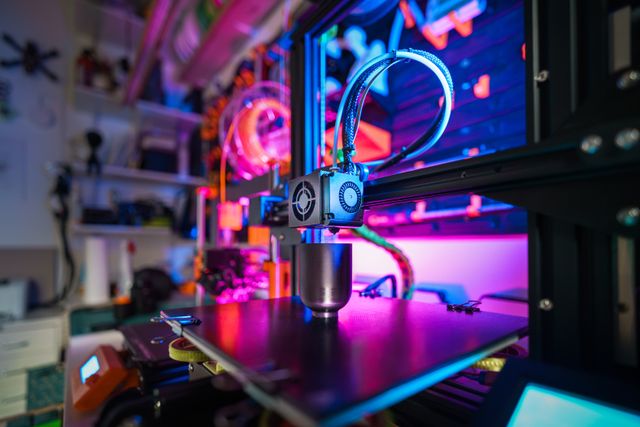
While the earliest 3D printers in the 1980s solidified a liquid resin using ultraviolet light for expensive industrial prototypes, current iterations of this concept are employed to manufacture medical implants and parts for commercial aircraft and even for spacecraft on their trips to outer space. Nonetheless, there are certain caveats associated with this approach, which are acknowledged by the Australian national science agency. In order to comprehend why, it would be useful to look closer at how the process works.
The Principle Behind 3D Printing Without Complex Terms
In traditional machining, there was a solid block of material from which unnecessary pieces were cut off. With additive manufacturing, it goes vice versa; instead, a design prepared in computer-aided design software is divided into a hundred or a thousand of slices, and then a machine constructs an object layer-by-layer in accordance with the design, putting material where it is needed. The name 3D printing refers to the early plastic-based technology but is still in common use. As an industry term, additive manufacturing also covers polymer, metal and ceramic technologies that are applied in professional environments.
Five Families Of The Technologies
For anyone asking what is additive manufacturing, there are several distinct technologies within the umbrella that correspond to certain purposes:
- Powder bed fusion involves spreading a thin layer of fine powder and melting it using a laser or electron beam.
- Directed energy deposition includes melting material as it is introduced to a focused energy source.
- Binder jetting implies gluing powder particles using a binding liquid.
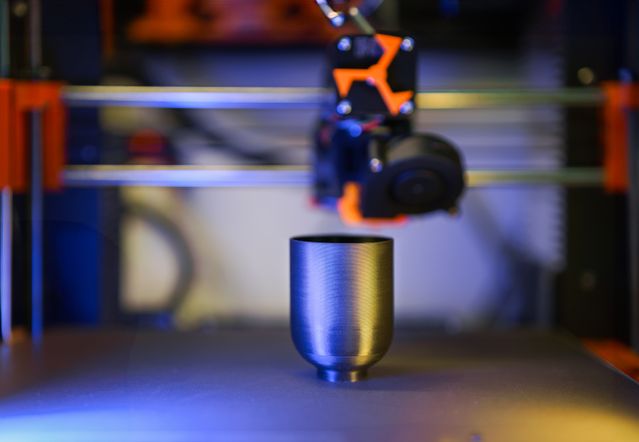
- Material extrusion implies extruding melted material, usually plastic, via a nozzle, and that is a technology that most people are thinking about when it comes to 3D printing.
- Vat photopolymerisation consists of hardening liquid resin with light.
Not a single method dominates in all respects; the best choice can be made depending on the material used, the desired precision, the size of the part and budget.
What Can Be Done Depends On The Materials?
Most commonly, plastics are used for prototypes and functional parts; metals such as titanium, aluminium, various types of steel and copper alloys are used for industrial purposes while ceramics are preferable for extreme conditions. According to CSIRO, the important recent achievement in the field is the appearance of materials tailored for additive manufacturing, which allow quick temperature changes while being printed.
Strengths That Really Make A Difference
CSIRO sees additive manufacturing really shining when it comes to making complex shapes that just can’t be made with traditional methods, or they’re just too expensive or time-consuming. You can easily create things like lightweight lattices, internal cooling systems and parts combined into single units, but don’t forget to keep an eye on the limitations of your process. Since no tooling or moulds are needed, you can speed up production times like crazy for prototypes, small batches and custom items. They also point out that the lack of tooling means you’ll see less waste, can make design changes faster and get parts made closer to where they’re needed. Of course, results can still vary depending on what you’re doing.
The Flip Side: Things You Need To Watch Out For
Don’t get the idea that additive manufacturing is a case of “print and done”; that’s rarely the case. Most of the time, printed parts need a little extra TLC (heat treatment, trimming, smoothing) and then you’ve got to inspect them too. And all that takes time and money, so you need to factor that in from the get-go. Print times can be anywhere from a few hours to a couple of days. And if you’re just making simple parts in bulk, there’s a good chance conventional manufacturing is going to be cheaper and faster. On top of that, you’ve got to have the right skills and equipment, and even then there are strict qualifications to jump through, especially if you’re dealing with metal parts for high-stress jobs. A simple test is to ask yourself whether you’re dealing with complex, high-value or low-volume parts; if so, additive manufacturing is worth looking at. But if you’re just making simple, cheap stuff in large quantities, you might be better off sticking with what you know.
How Everyday People Are Already Using It?
You might be surprised to find out how often additive manufacturing is already part of your life, without you even realising it. Custom medical devices, replacement parts for old products and early design models for new gadgets are all made using this process. Even here in Melbourne, the Lab22 Innovation Centre at Clayton has been helping local companies explore metal printing for a decade, and now many of them have got their own equipment. That sort of shared access can make a huge difference for small to medium-sized manufacturers who might not otherwise be able to afford the equipment and expertise they need.
A Tool To Complement The Old Ones, Not Replace Them
CSIRO don’t think additive manufacturing is going to replace traditional processes; it’s going to sit alongside them, as a useful tool to have in your belt. Their researchers are working on getting sensors that can check the quality of a part as it’s being made, and parts that come out of the machine ready to go without needing any extra work. But that’s still a few years off. For now, it’s best to think of additive manufacturing as a powerful option that can help with the right job, but only if you understand its strengths and weaknesses.