
The lighting in your workplace does far more than simply brighten a room. It shapes the way people think, feel and perform throughout the day. In fact, thoughtful lighting design has become an essential part of modern workplace planning, right alongside ergonomic seating and cutting edge office furniture solutions. When lighting is done well, it supports mood, boosts energy and improves productivity. When it’s done poorly, it can have the opposite effect.
Below, we explore how office lighting impacts daily work performance—and what businesses can do to create a healthier, more energising environment for their teams.
Lighting and Mood: Why It Matters
Mood plays a significant role in how people work, collaborate and respond to challenges. Lighting influences mood in ways many people overlook.
Natural light is one of the most powerful mood boosters. Exposure to daylight has been shown to increase serotonin levels, which are linked to feelings of wellbeing and calm. Employees who sit near windows often report feeling more positive, motivated and clear-headed throughout the day.
On the other hand, harsh artificial lighting—especially fluorescent lighting—can create glare, flicker and visual discomfort. This can contribute to irritability, stress or even feelings of fatigue. Warm, diffused lighting tends to create a calmer atmosphere, helping employees stay relaxed yet focused.
How Lighting Affects Performance and Productivity
Good lighting enhances productivity by reducing visual strain and making it easier to concentrate. When lighting is insufficient or poorly distributed, employees may squint, lean forward or shift positions repeatedly to see their work clearly. Over time, this leads to distraction, eye strain and reduced output.
A well-lit workspace supports:
- Better focus and accuracy: Clear, consistent lighting minimises mistakes by providing strong visual clarity.
- Enhanced problem-solving: Lighting that mimics natural daylight has been found to improve cognitive function.
- Improved collaboration: Light and bright meeting spaces make it easier for employees to engage and communicate effectively.
Even small changes—like swapping cool white bulbs for daylight-spectrum LEDs—can have a noticeable impact on how well people perform throughout the day.

Energy Levels and Circadian Rhythms
Our bodies follow a natural internal clock, known as the circadian rhythm, which controls sleep, alertness and energy levels. Lighting plays a key role in regulating this rhythm.
Bright, blue-toned light stimulates alertness, which is why it works well for morning or analytical tasks. In contrast, warmer lighting helps reduce overstimulation, making it ideal for late afternoon work or creative tasks where a more relaxed mindset is beneficial.
When office lighting is too dim or inconsistent, employees may feel sluggish, sleepy or easily distracted. A balanced lighting strategy maintains energy levels by working with the body’s natural rhythms rather than against them.
The Benefits of Natural Light in the Workplace
Natural light remains the gold standard for supporting mood and productivity. Key benefits include:
- Reduced fatigue: Employees who receive adequate daylight exposure experience fewer mid-afternoon energy slumps.
- Improved sleep quality: Natural light helps regulate the body’s sleep-wake cycle, leading to better rest and sharper daytime performance.
- Greater job satisfaction: Well-lit offices feel more open and uplifting, contributing to a better overall workplace experience.
Where possible, offices should prioritise window access, open floor plans and reflective surfaces to carry natural light further through the space.
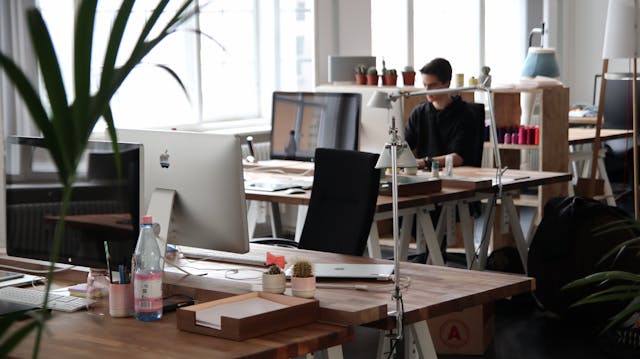
How to Optimise Lighting in a Modern Office
Improving office lighting doesn’t necessarily require a full renovation. Smart adjustments can transform the way a workplace feels and functions.
- Combine natural and artificial lighting: Use natural light as the foundation, supported by well-positioned LED fixtures.
- Use task lighting where precision is essential: Adjustable desk lamps help employees tailor their lighting to the activity at hand.
- Choose the right colour temperature: Cooler tones support focus, while warmer tones are ideal for creative work or relaxation spaces.
- Eliminate glare and flicker: Glare from screens or overly bright fittings can cause headaches and eye strain. Opt for diffused or indirect lighting options.
- Ensure even light distribution: Uneven lighting creates visual discomfort. Spread lighting sources across the space for consistent brightness.
- Pair lighting with ergonomic workplace design: Thoughtful lighting works best alongside supportive layouts, comfortable seating and functional work areas.
As you can see, office lighting has a direct and measurable impact on mood, performance and energy levels
From regulating circadian rhythms to improving morale, the right lighting can transform a workspace into a more productive, comfortable and engaging environment.By choosing lighting that supports wellbeing—and pairing it with thoughtful design elements such as ergonomic seating and cutting edge office furniture solutions—businesses can create offices where people feel energised, focused and ready to do their best work every day.